The Only Appliance a Raw Kitchen Truly Needs Is a Sharp Knife
Before the blender or the dehydrator, raw food depends on a good knife and a steady board. The three knives worth owning, how to care for boards, and the cuts that change texture.
 Linda Kowalski
Member Care & Community Lead
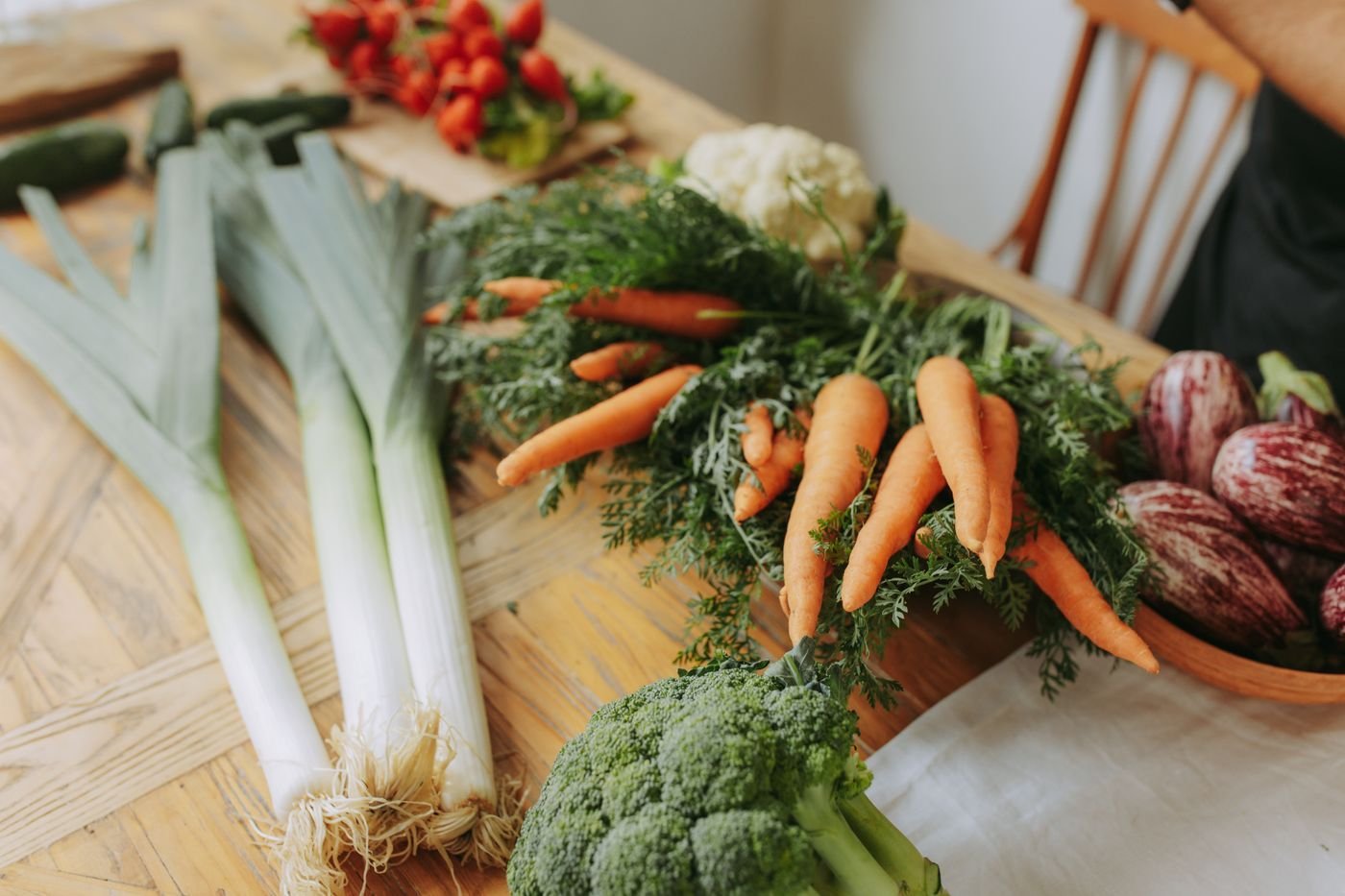
People who come to raw food often assume the first purchase should be a high-speed blender or a dehydrator. Both are useful. But when I look at what actually happens in my kitchen on an ordinary Tuesday, most of the work is done with a knife and a cutting board. Leeks, carrots, broccoli, an eggplant for marinating - nearly every raw meal starts as a pile of whole vegetables that need to become something you can eat with a fork.
Cooking forgives rough knife work. A clumsy chunk of carrot in a soup softens and nobody notices. Raw food is less forgiving. The size and shape of each piece changes texture, how well it holds a dressing and even how sweet it tastes. Good knife skills are the quiet foundation of good raw food.
Three Knives Are Plenty
You do not need a block of twelve. I use three.
- A chef's knife, about 8 inches, for most chopping, slicing and dicing
- A paring knife, 3 to 4 inches, for trimming, coring and small fruit
- A serrated knife for tomatoes and anything with a slick skin
Buy the best chef's knife you can comfortably afford, and hold it before buying if you can. It should feel balanced in your hand, not heavy at the tip. Stainless steel is easy to care for. Carbon steel takes a keener edge but needs to be dried right away because it rusts.
Keep them sharp. A dull knife crushes vegetables instead of slicing them, which bruises delicate herbs and makes tomatoes weep. It also slips, which is how most kitchen cuts happen. A honing steel used every few days keeps the edge aligned, and a proper sharpening on a whetstone or by a professional two or three times a year restores it.
Choosing and Caring for Cutting Boards
Wood and good-quality plastic are both sound choices. Glass, marble and ceramic boards look lovely but dull your knife quickly, so keep those for serving.
- A large wooden board, at least 12 by 18 inches, gives you room to work and keeps piles from spilling
- A smaller plastic board for onion and garlic, so your fruit does not taste of them later
- A damp towel under the board so it does not slide
Wash wooden boards with warm soapy water right after use, dry them standing on edge and rub them with food-grade mineral oil about once a month. Never put them in the dishwasher or leave them soaking in the sink.
The Cuts That Matter Most in Raw Prep
Start with a safe grip. Pinch the blade just above the handle between your thumb and the side of your index finger, and wrap your other fingers around the handle. On the guiding hand, curl your fingertips into a claw so your knuckles guide the blade and the tips stay tucked away.
Then practice these:
- Chiffonade: stack leaves like kale or basil, roll them tightly and slice across into thin ribbons, essential for massaged kale salads
- Julienne: cut a vegetable into planks, stack the planks and slice into matchsticks, perfect for carrots and zucchini in wraps
- Fine dice: turn julienne sticks sideways and cut across into tiny cubes for salsas and raw tabbouleh
- Bias slice: angle the knife about 45 degrees across leeks, celery or scallions for longer pieces that catch dressing
Working With Tricky Vegetables
Leeks hide dirt between their layers. Trim the dark green tops and the root, slice the white and pale green part in half lengthwise, then fan the layers under running water before slicing. For raw use, cut them very thin and let them sit in lemon juice and salt for ten minutes to soften their bite.
Broccoli stems are often thrown away, which is a shame because they are sweet and crisp. Peel the tough outer layer with your paring knife and cut the tender core into matchsticks. Separate florets by cutting through the stem underneath rather than chopping across the top, so they do not crumble.
Eggplant is best for raw dishes when sliced thin and marinated. Cut it into rounds no thicker than a coin, salt them for 20 minutes, press out the liquid, then marinate in olive oil, tamari and lemon before a few hours in the dehydrator.
Practice Makes It Pleasant
The first week of focused practice feels slow. Give yourself permission to cut one carrot carefully rather than five carrots quickly. By the end of a month your hands will know what to do, and the time you spend chopping becomes one of the calmest parts of the day. A sharp knife, a steady board and a pile of fresh vegetables are, honestly, most of what a raw kitchen needs.